WHY SETIA EDENIA CHOSE MONOLITHIC CONCRETE EXTERNAL WALLS
A Technical Decision for Decades of Building Quality
When a high-rise residential project is developed, most of what residents see is the final layer of finishes. Yet the true quality of a building is determined by the structural elements and construction methods that lie behind that finish.
At Setia Edenia, we have chosen monolithic concrete external walls cast together with the columns, beams and slabs using the Gangform climbing formwork system. This solution was studied and decided at the design stage, with the aim of creating a facade that is more stable, more durable and more resilient throughout the life of the project.
Unlike the conventional method, in which external walls are built only after the structural frame is complete, the external walls at Setia Edenia become part of the concrete structure, formed within the same construction cycle. This makes a fundamental difference to the long-term quality of the building.
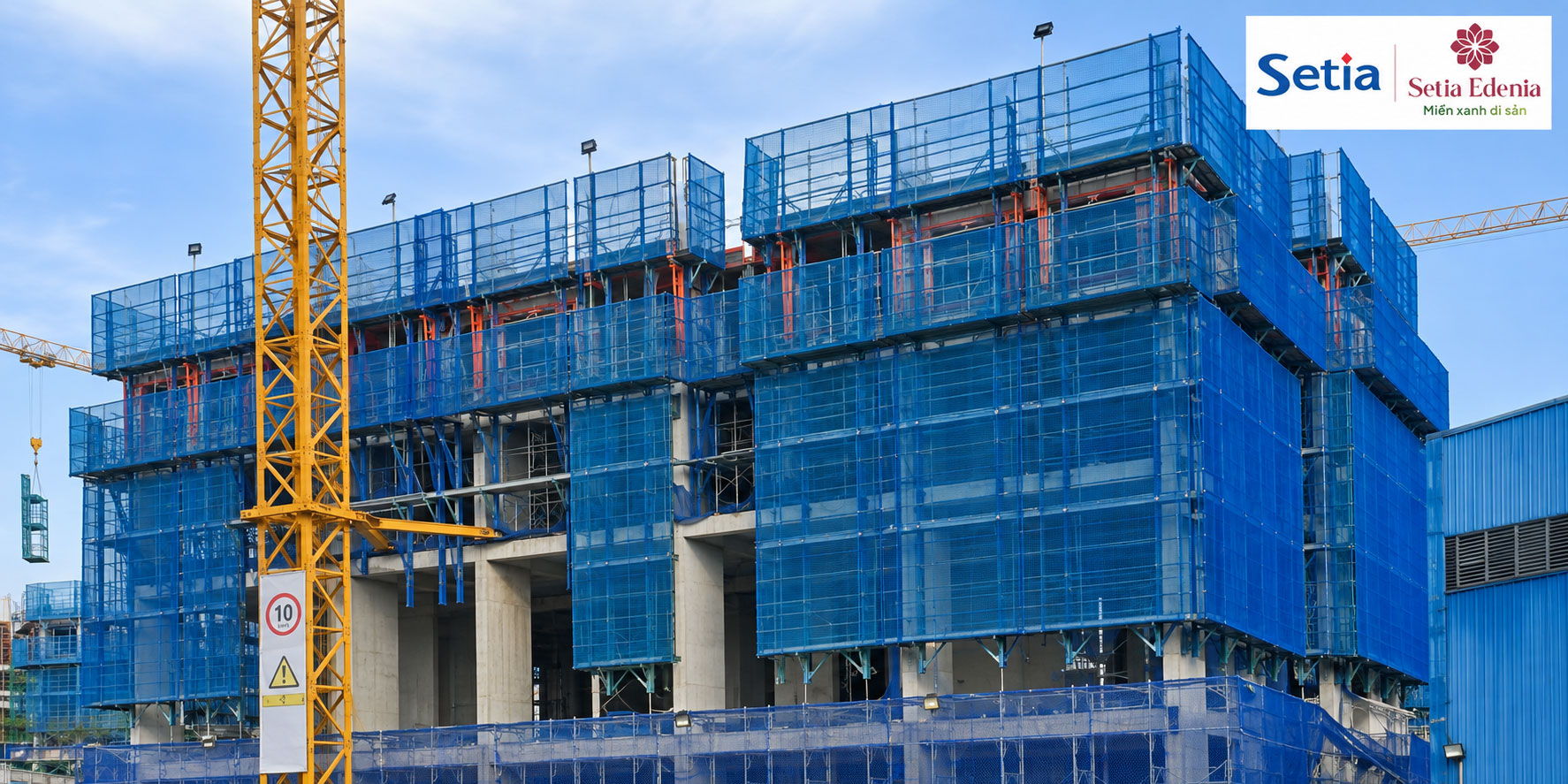
The Setia Edenia construction site within EcoXuân Township
A Uniform Structure From Within Delivers Superior Durability
With conventional brick walls, the structural frame and the walls are two separate components, built at different times from materials with different mechanical properties.
Over time, differences in shrinkage, thermal expansion and movement between the concrete frame and the masonry can cause cracks to appear at the junctions between them.
With the monolithic concrete external wall solution at Setia Edenia, the external walls, columns, beams and slabs are cast in the same concrete cycle, forming a continuous and uniform structural system.
From a technical perspective, this brings several important advantages:
- Greater structural continuity.
- Minimal junctions between dissimilar materials.
- Reduced risk of cracking where walls meet the load-bearing frame.
- Improved geometric stability across the entire facade.
- Longer-lasting external finishes.
This is one of the reasons why monolithic concrete walls are increasingly used in high-quality high-rise developments around the world.
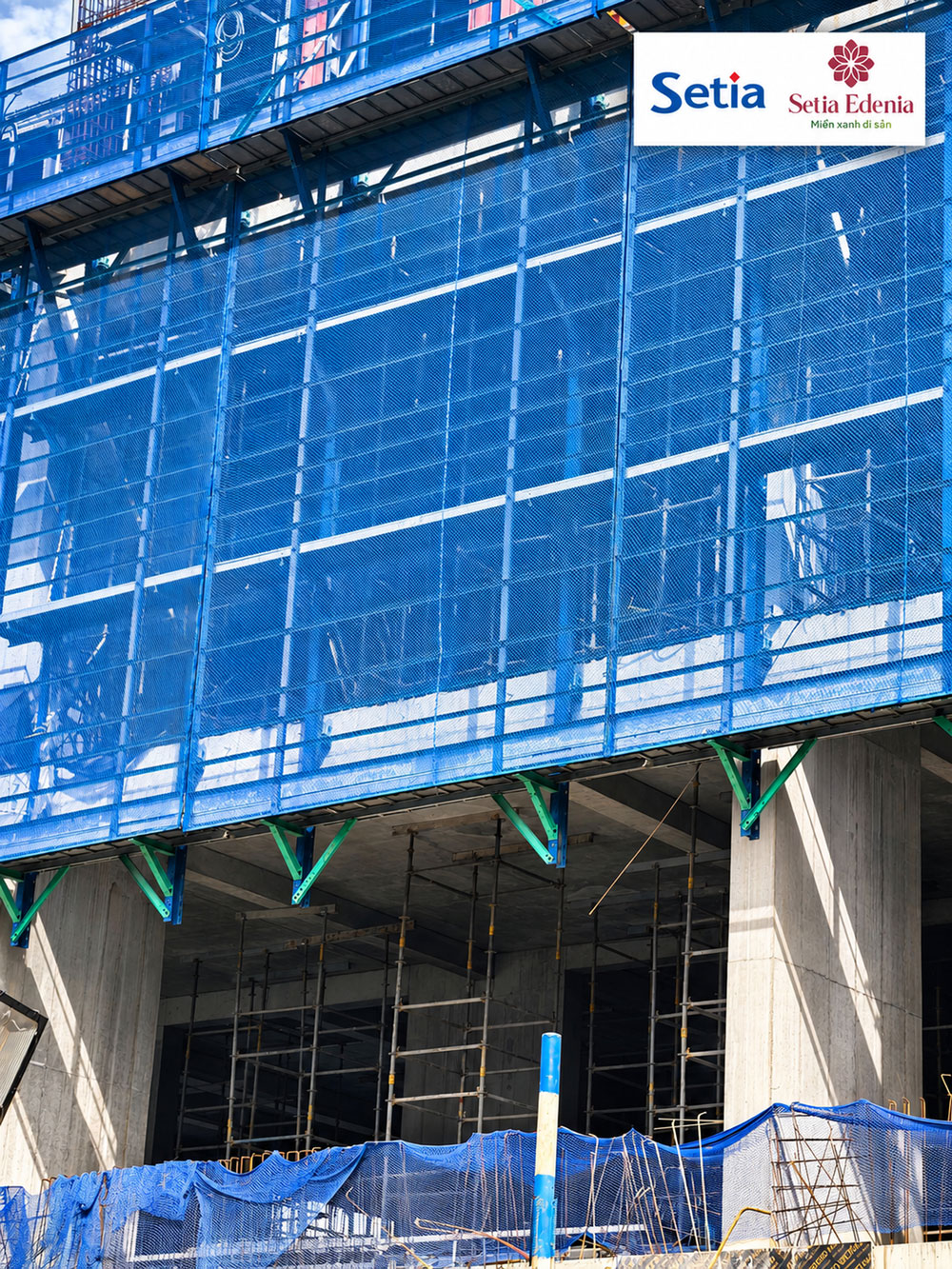
A uniform structure from within delivers superior durability
Fewer Joints, Lower Risk of Water Ingress
In a hot, humid climate with heavy rainfall such as Vietnam’s, facade waterproofing is always among the most important technical requirements for high-rise housing.
In conventional masonry walls, water can find its way in through many different points:
- Mortar joints;
- Gaps between walls and columns;
- Sealed infill points;
- Interfaces between multiple layers of material.
Every junction is a potential risk that must be controlled through several layers of treatment.
With monolithic concrete external walls, the number of junctions is significantly reduced by the one-piece construction from the outset. When the quality of the concrete, the formwork and the pouring process are controlled to the correct standards, the facade offers more consistent waterproofing and a much lower risk of problems arising from joints between materials.
This is a particularly important benefit for high-rise buildings with a service life of many decades.
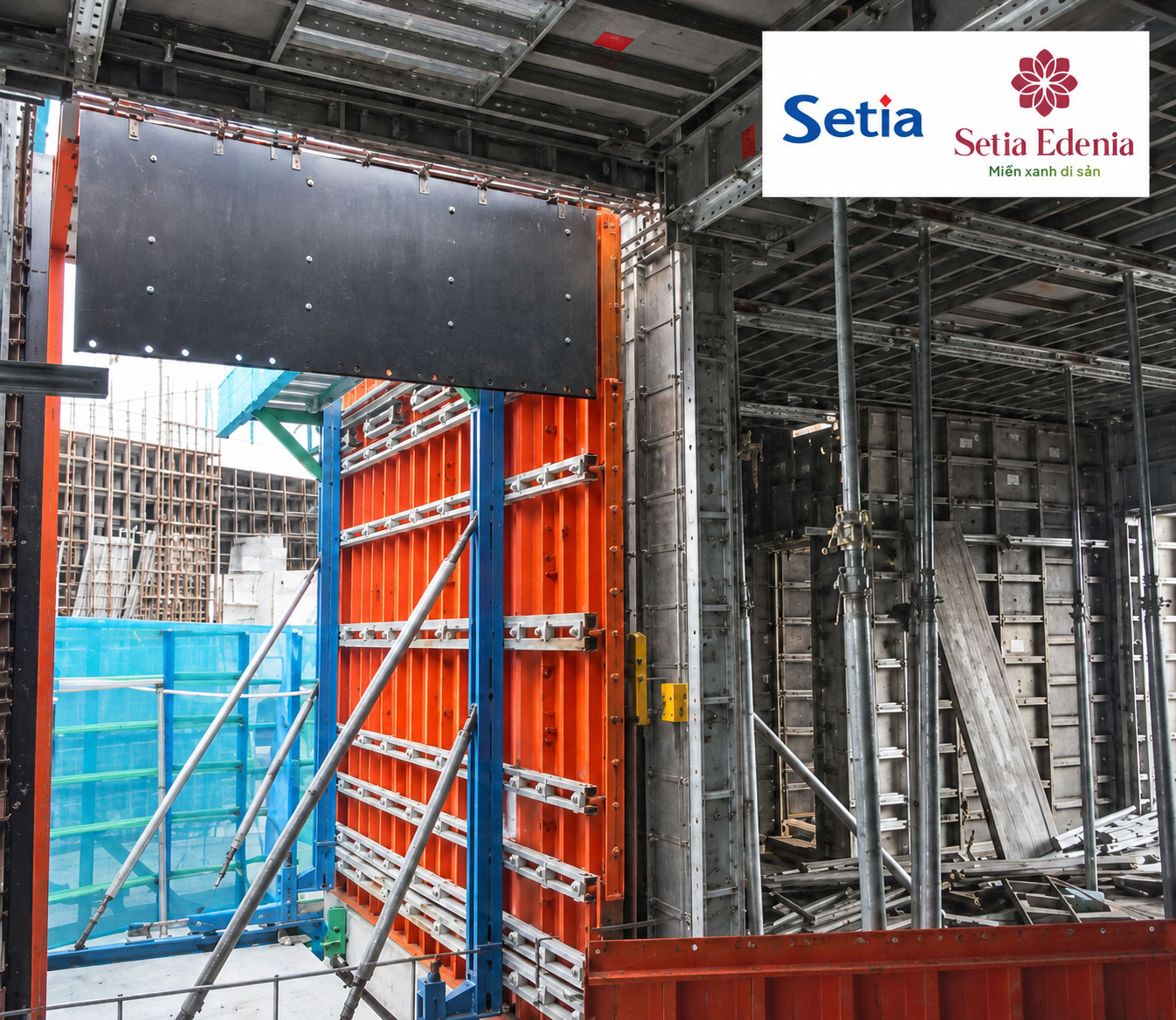
Fewer joints, lower risk of water ingress
Material Strength Several Times That of Conventional Masonry
Another important advantage of monolithic concrete external walls is their superior load-bearing capacity and mechanical stability.
According to the technical documentation used for the project, the concrete external walls have a compressive strength of 25 MPa, whereas the bricks commonly used for external walls reach only 7.5 MPa.
Although external walls are not the building’s primary load-bearing elements, higher material strength still brings many benefits:
- Greater impact resistance.
- Improved stability of the building envelope and the structure as a whole.
- Less mechanical damage during everyday use.
- A longer overall service life for the building envelope.
From a long-term development perspective, this helps to maintain quality and asset value for many years after handover.
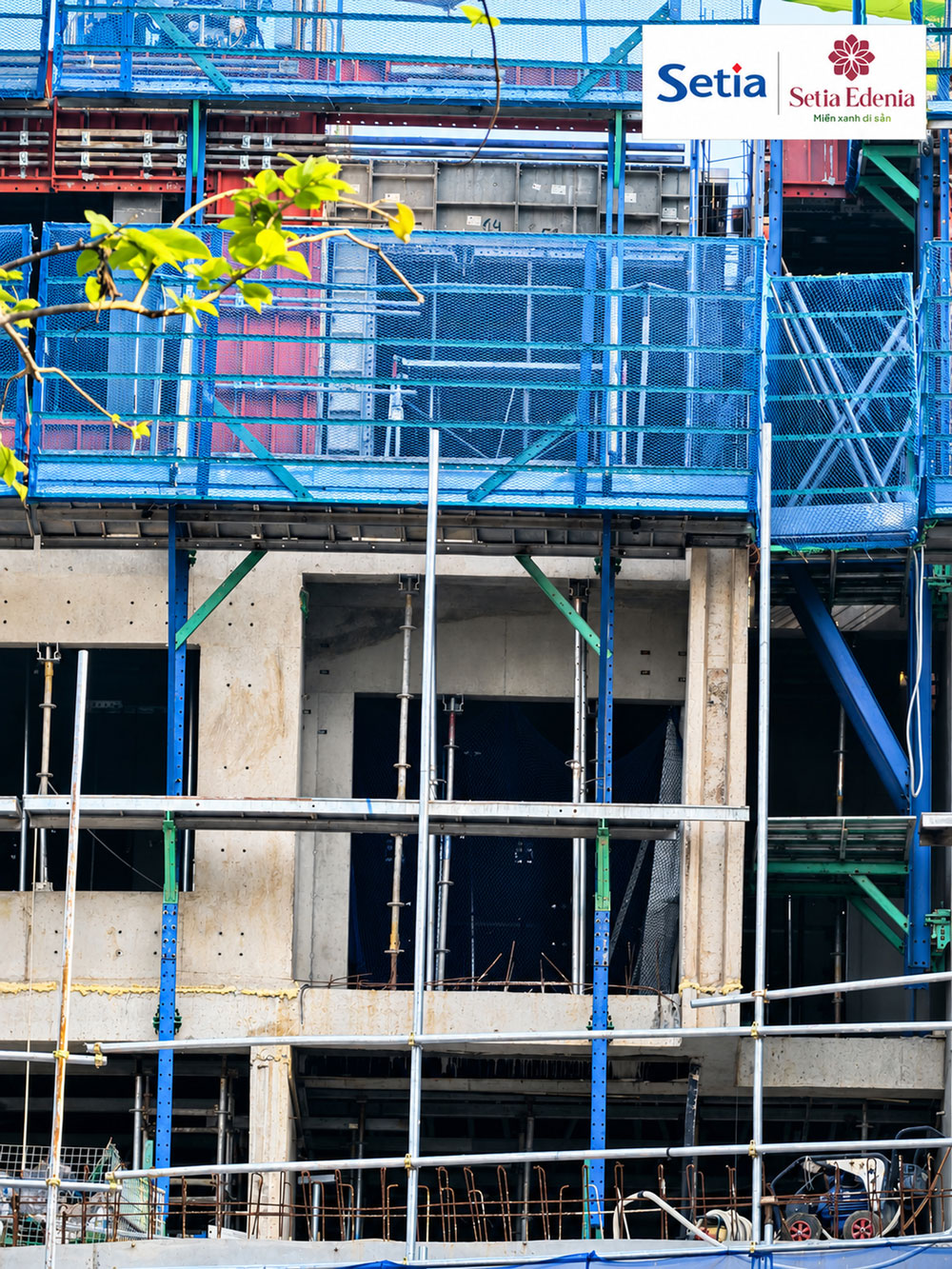
Material strength several times that of conventional masonry
Industrialised Construction for Consistent Quality Control
In high-rise construction, the challenge is not building one floor to a high standard, but maintaining the same standard across dozens of consecutive floors. The Gangform system was developed to solve exactly this problem.
Large steel formwork assemblies are purpose-designed for the building’s facade and moved from floor to floor according to a standard construction cycle. As a result:
- Geometric tolerances are better controlled.
- Walls remain consistently plumb.
- Concrete surface quality is more uniform.
- There is less reliance on differences in skill between site crews.
- Quality can be controlled more effectively over the full height of the building.
Gangform is used for the external walls and works alongside aluminium formwork for the columns, beams and slabs, creating an industrialised and fully coordinated construction process across the entire project.
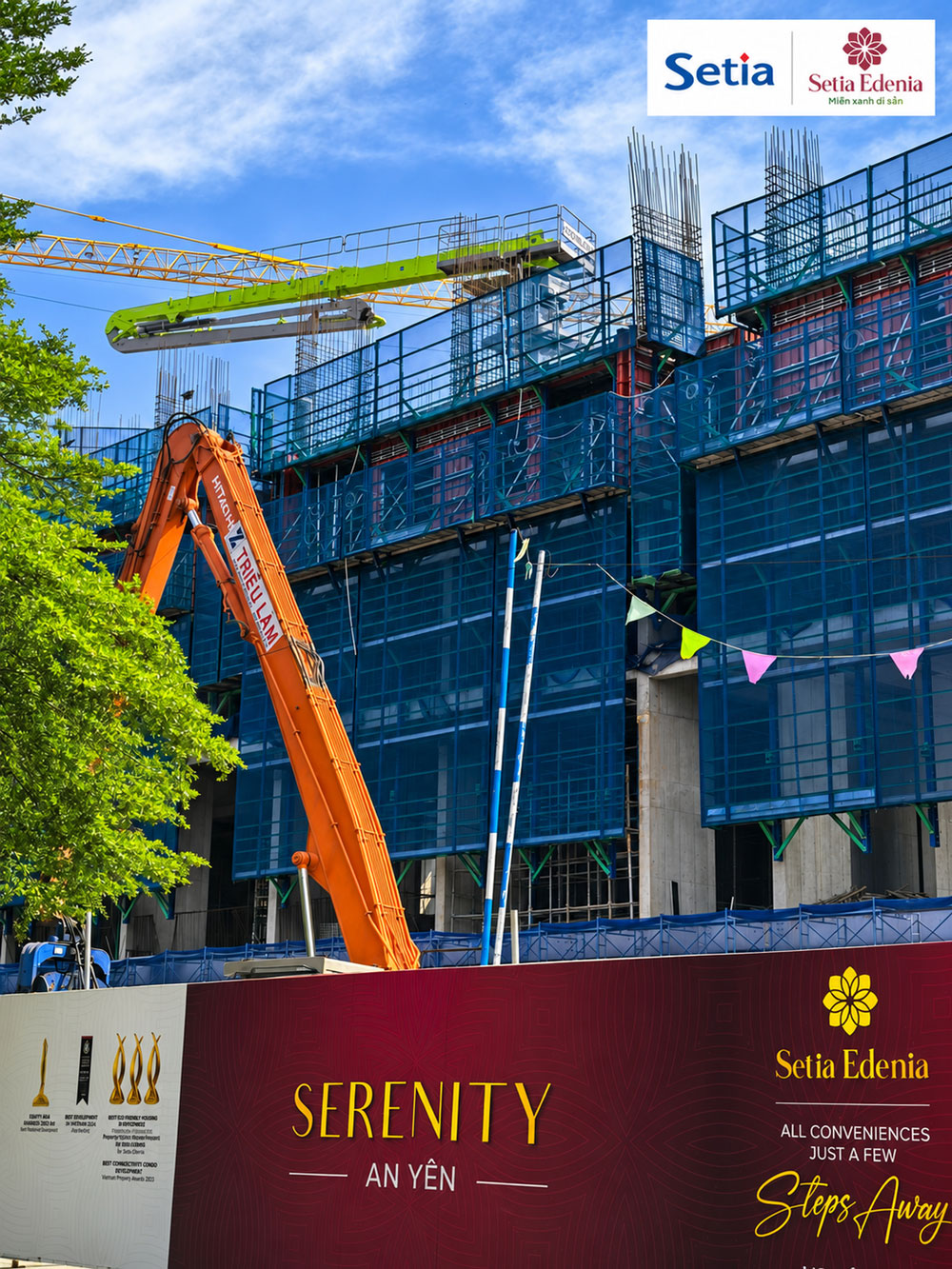
Industrialised construction for consistent quality control
The Value Residents Receive After Handover
For the developer, the choice of external wall solution is not only about the construction phase.
The greatest value of this decision emerges once the building is in operation and in use.
A uniform, stable and durable external wall system helps to:
- Reduce the risk of cracks in facade finishes.
- Improve long-term waterproofing.
- Limit routine maintenance costs.
- Preserve the building’s appearance over time.
- Help protect the value of residents’ homes.
These are qualities that are not easy to see on handover day, but they directly affect the living experience and the cost of ownership for many years afterwards.
From the Construction Site to the Green Legacy
Setia Edenia is located within EcoXuân Township, where the green landscape has been nurtured for more than 20 years, as told in the project’s brand story. The existing landscape creates the first impression; the quality of the building will be judged through years of use. For the two to go hand in hand, the choice of materials must be followed through with proper construction and maintenance.
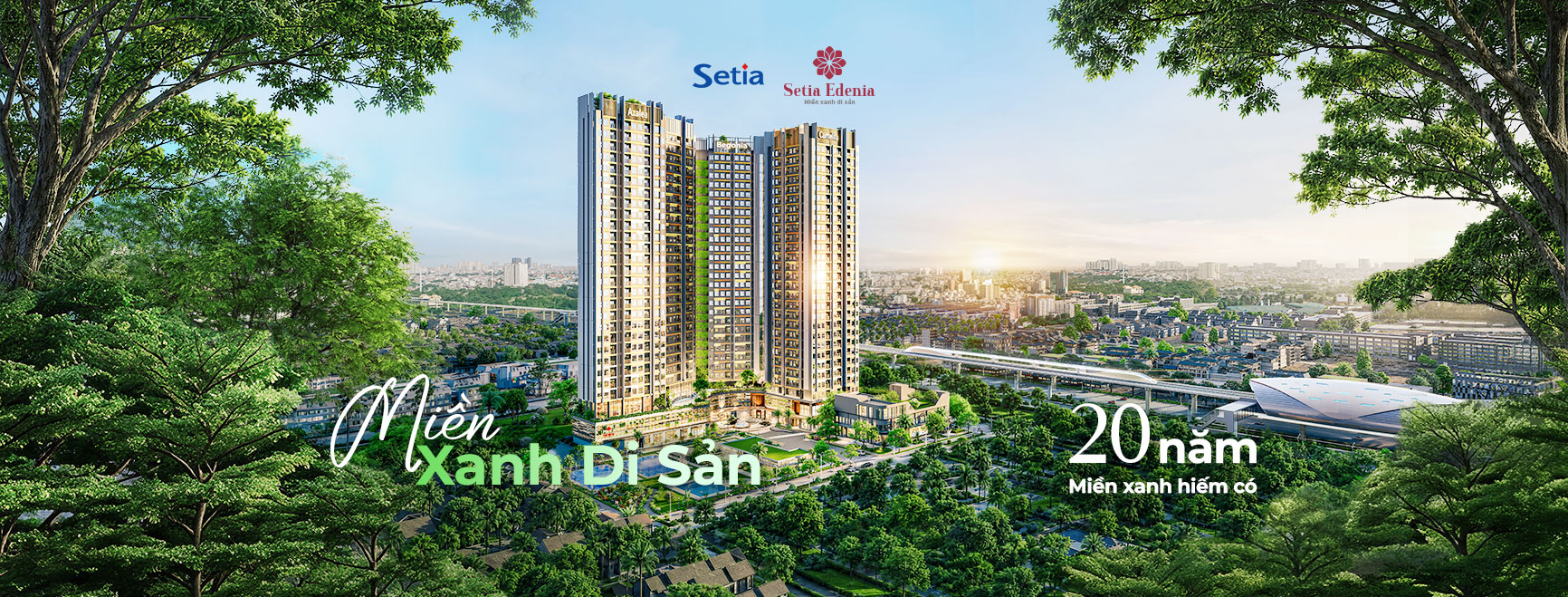
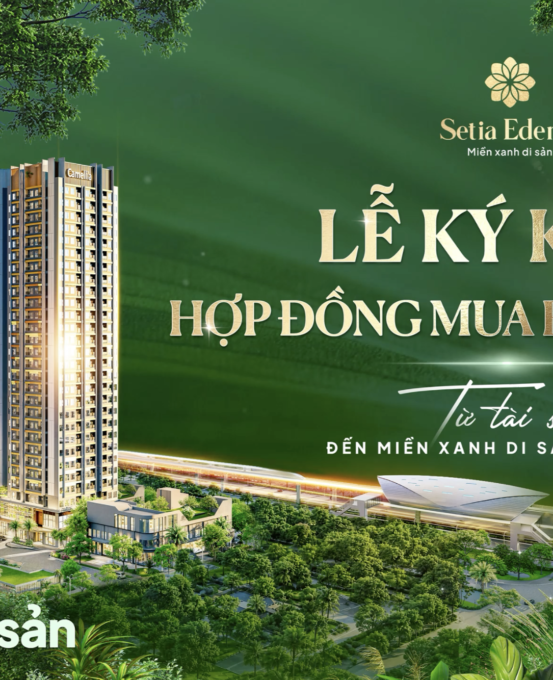
Artist’s impression of Setia Edenia within the 20-Year Green Legacy of EcoXuân Township.
The next four parts of this series will look in turn at technical work on site, the questions homebuyers ask, how to advise without overstating, and inspecting the external walls after handover. Each perspective has something specific to clarify, rather than simply repeating the same list of benefits.
In Brief: Gangform and Concrete External Walls from the Developer’s Perspective
That is why we chose monolithic concrete external walls, cast together with the columns, beams and slabs, to deliver lasting build quality and long-term value for residents. |
The choice is made on the drawing board. The quality is proven on site.
Gangform is the tool; process and people determine the result.
SETIA EDENIA — THE 20-YEAR GREEN LEGACY