National Highway 13 Expansion Plan: 60 m Wide, 10–14 Lanes and Almost VND 21,000 Billion
Transport and infrastructure report – After more than two decades of waiting, the National Highway 13 expansion at the north-eastern gateway to Ho Chi Minh City is finally set for a complete transformation. The upgrade plans a 60 m-wide road carrying 10 to 14 lanes, with an elevated expressway running along the centre of the avenue, and is expected to resolve the congestion that has persisted for years.
Scale, Scope and Timeline of the National Highway 13 Expansion
The National Highway 13 expansion has been identified as one of the leading infrastructure projects that Ho Chi Minh City is expected to break ground on around National Day on 2 September this year, with completion and opening targeted for 2028. It is set to unlock the entire transport corridor at the city’s north-eastern gateway.
Key planning specifications of the National Highway 13 expansion include:
- Length of the upgrade: The section runs from Binh Trieu Bridge to the boundary with the former Binh Duong Province – from Binh Trieu Bridge to Vinh Binh. The entire length lies within Hiep Binh Ward (formerly part of Thu Duc City).
- Investment model and total capital: Ho Chi Minh City is delivering the National Highway 13 expansion under a BOT (Build–Operate–Transfer) contract, with total investment estimated at almost VND 21,000 billion.
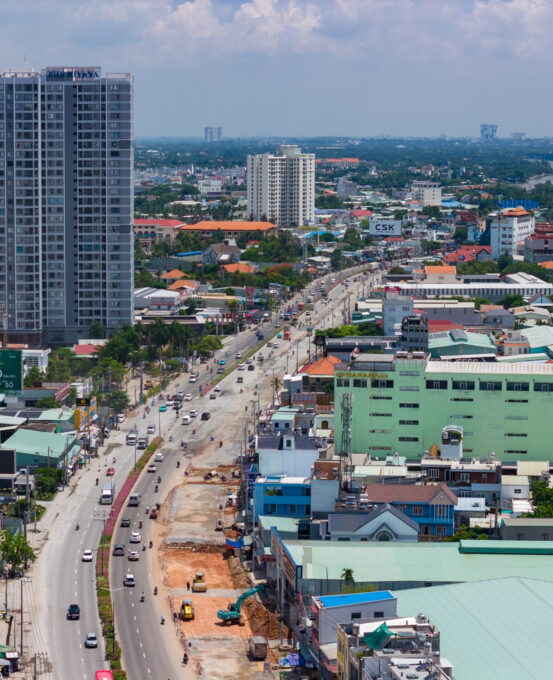
- Road widening: The road will be widened to 60 m, two to three times its current width of just 19 m to 27 m.
An Elevated Expressway at the Heart of the National Highway 13 Expansion
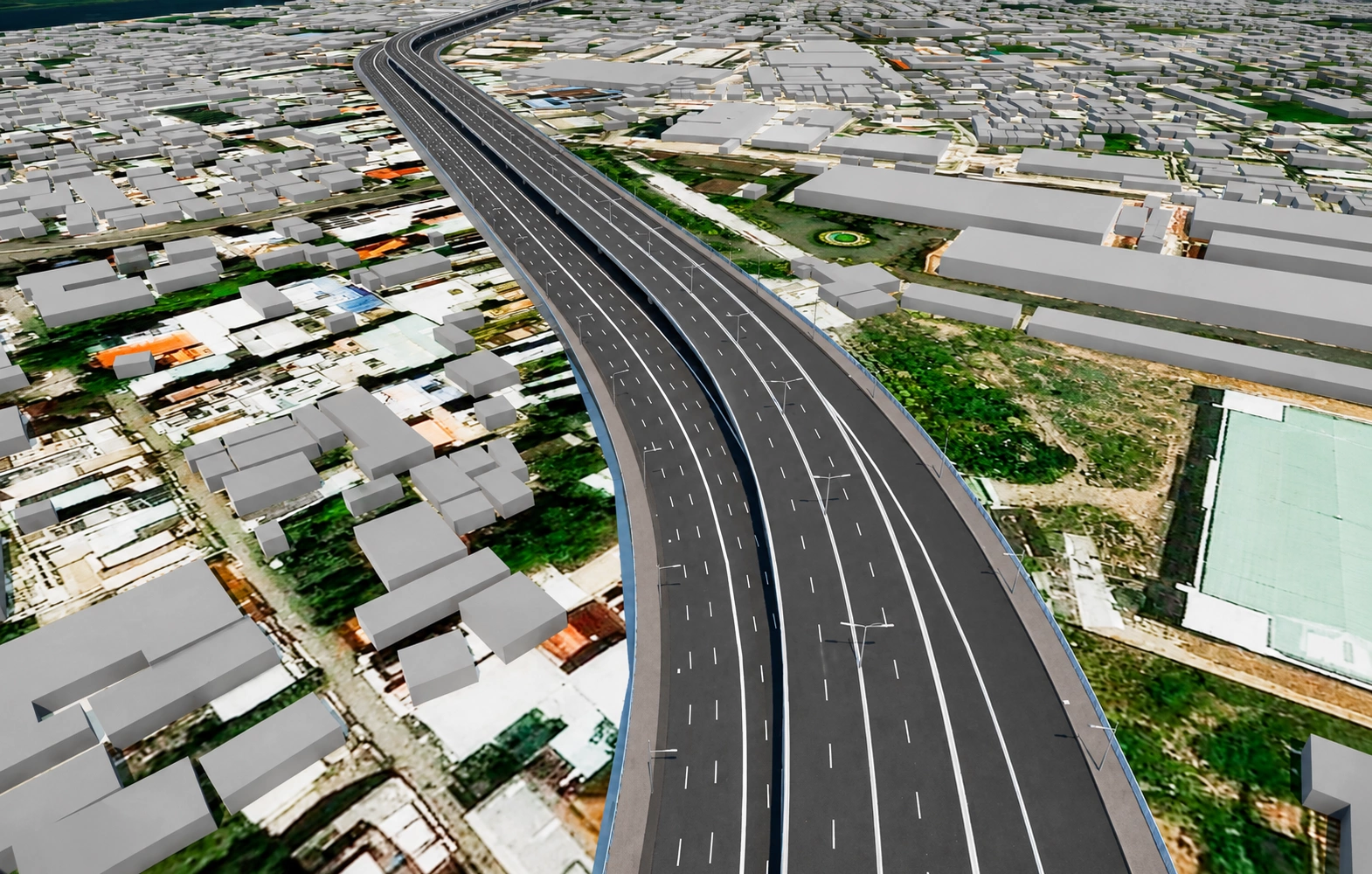
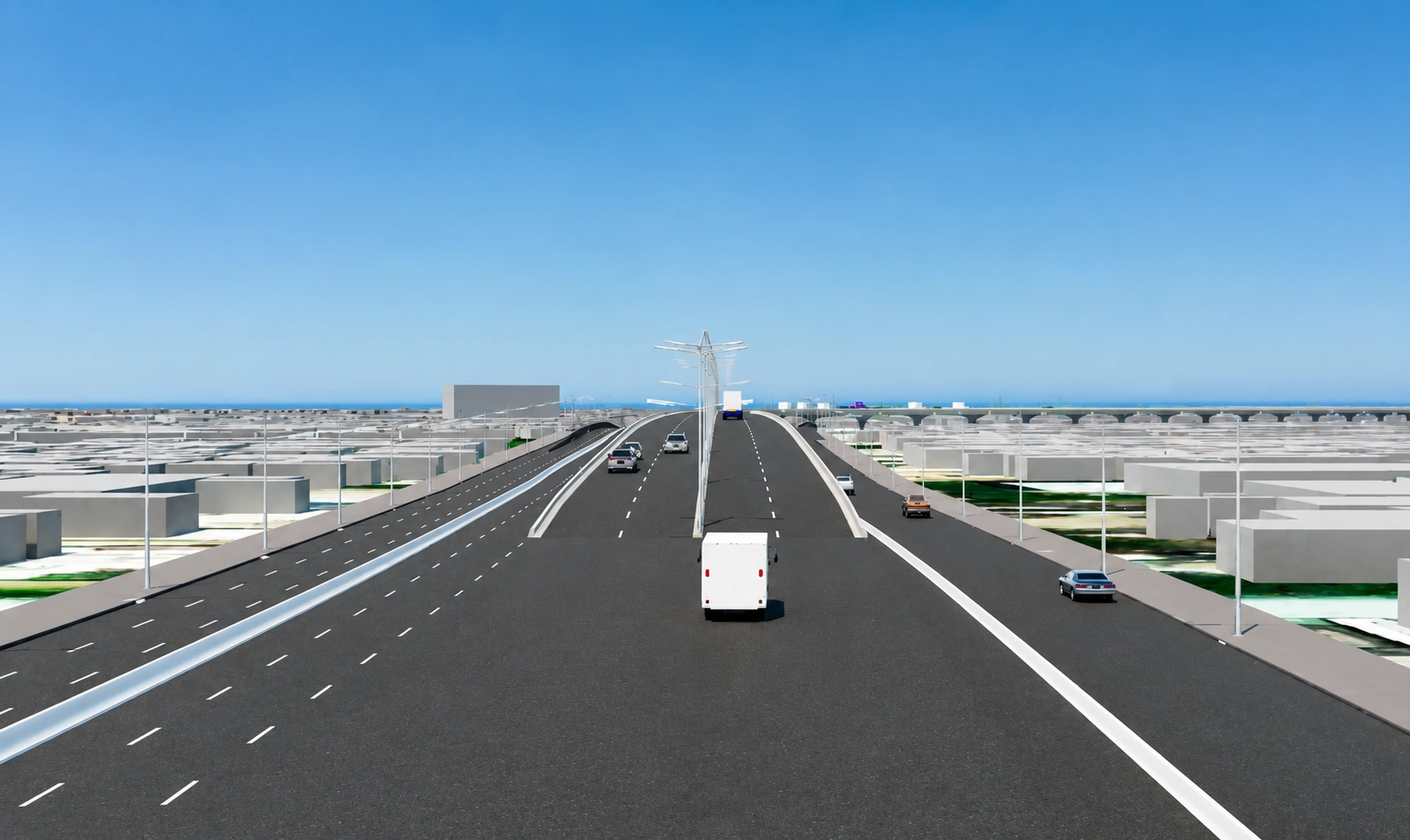
The key architectural and engineering feature along the National Highway 13 expansion is an elevated road (viaduct) running down the middle of the carriageway:
- Viaduct extent: The elevated road is about 3.5 km long, running from Binh Trieu Junction to Binh Phuoc Junction, with four lanes.
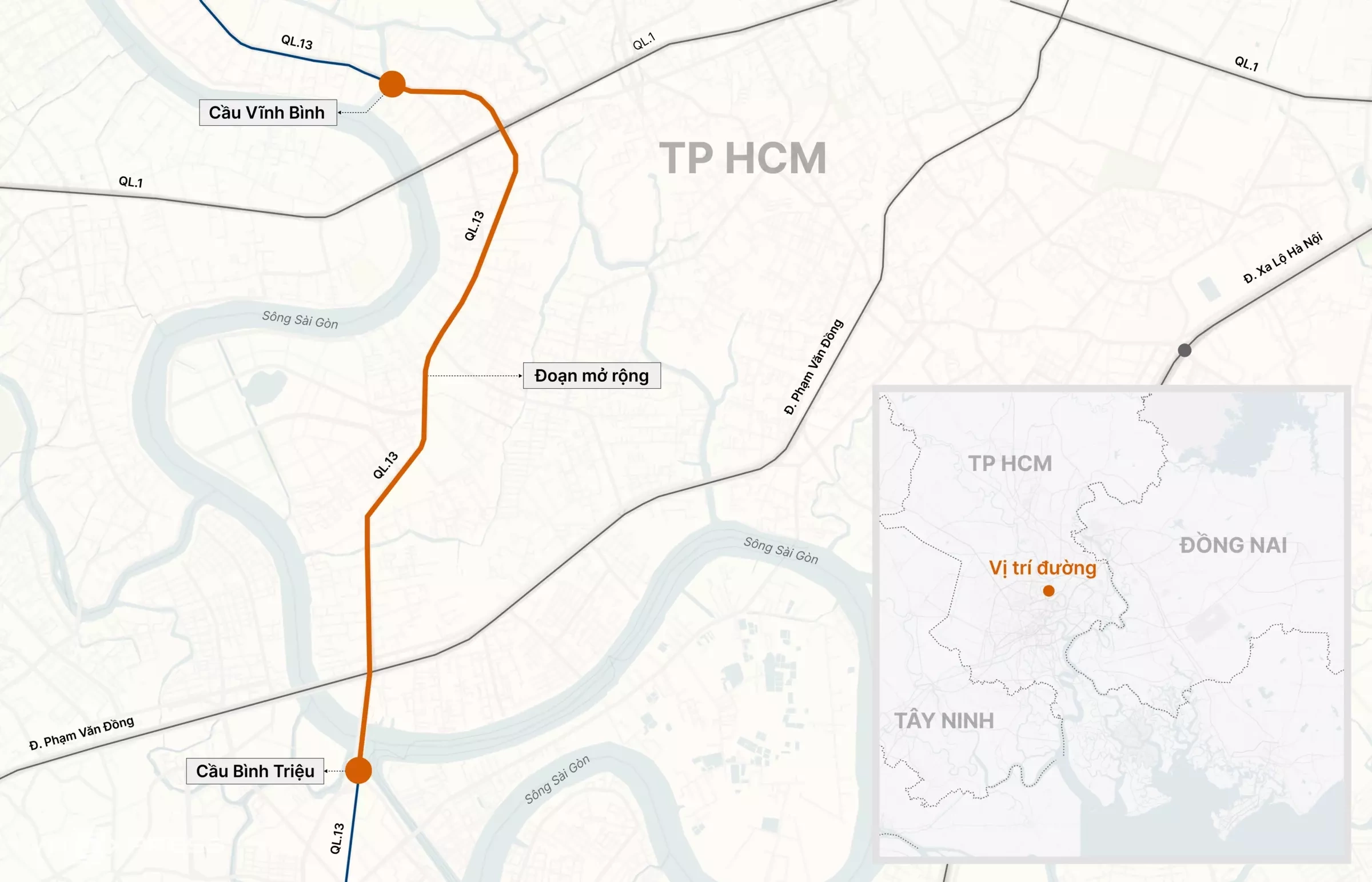
- At-grade parallel lanes: Laid out on both sides of the viaduct, bringing the total capacity of the route to 10 to 14 lanes depending on the section.
- Design speed: The elevated road is designed for 80 km/h, compared with 60 km/h on the parallel roads below.
- Traffic benefits and tolling: With no at-grade crossings, the viaduct allows vehicles to travel faster and more smoothly. Once the National Highway 13 expansion opens, the elevated section is expected to carry the BOT toll, while the parallel roads at ground level will remain entirely toll-free.
How the 10 Junctions Will Be Organised Under the National Highway 13 Expansion
There are 10 junctions along the full length of the National Highway 13 expansion. The two largest, Binh Loi and Binh Phuoc, both beneath the viaduct, will be fitted with underpasses to minimise conflicts between traffic flows.
1. Binh Loi Junction and the North–South Railway Crossing
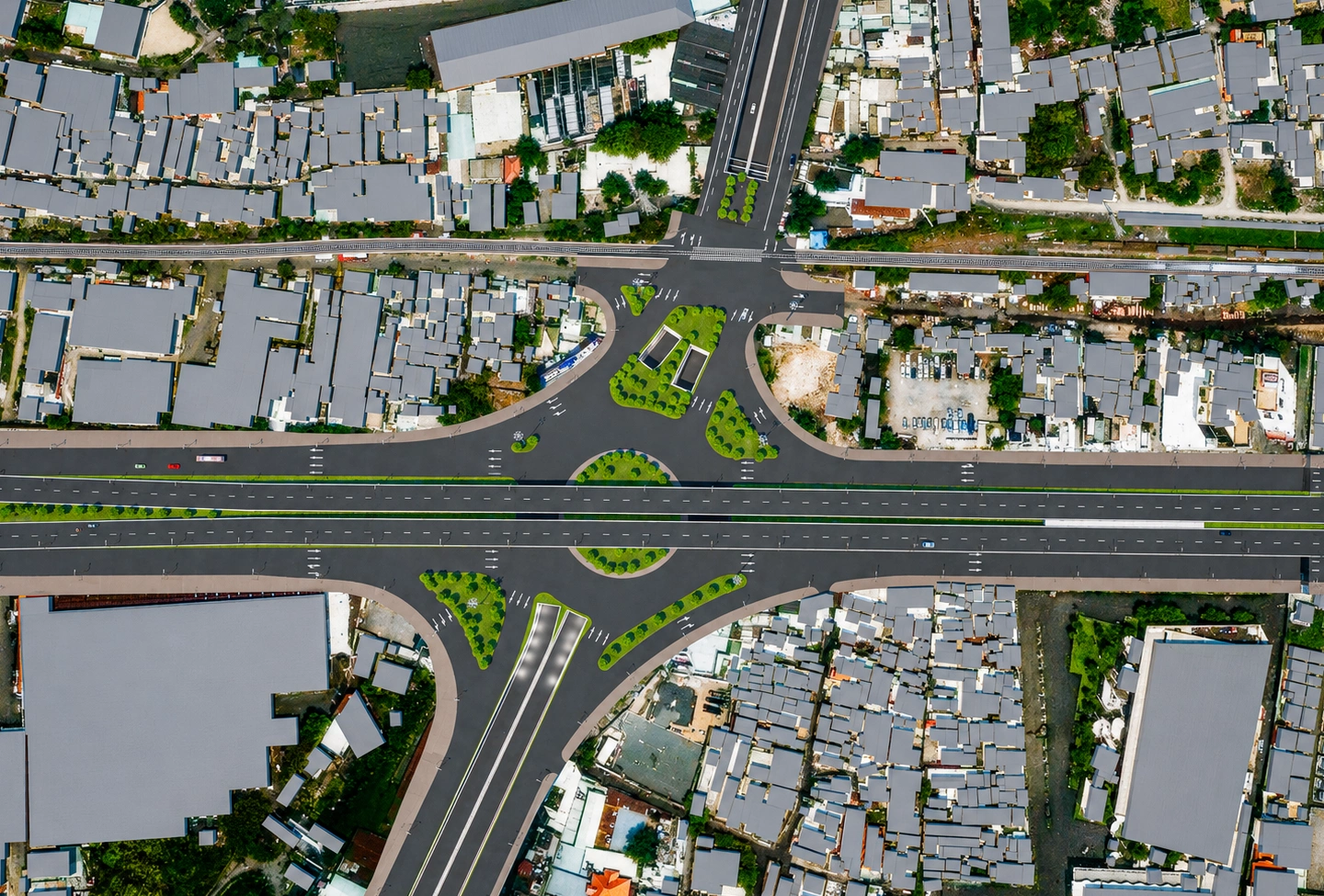
Binh Loi is a complex junction where the road meets Pham Van Dong Boulevard – a route carrying very heavy traffic between Thu Duc City, the city centre and Tan Son Nhat Airport. It is also where the road crosses the North–South Railway, making it a frequent congestion point.
To address this, the technical design for the National Highway 13 expansion provides for the Binh Loi underpass to pass beneath both the road junction and the North–South Railway. Specifically:
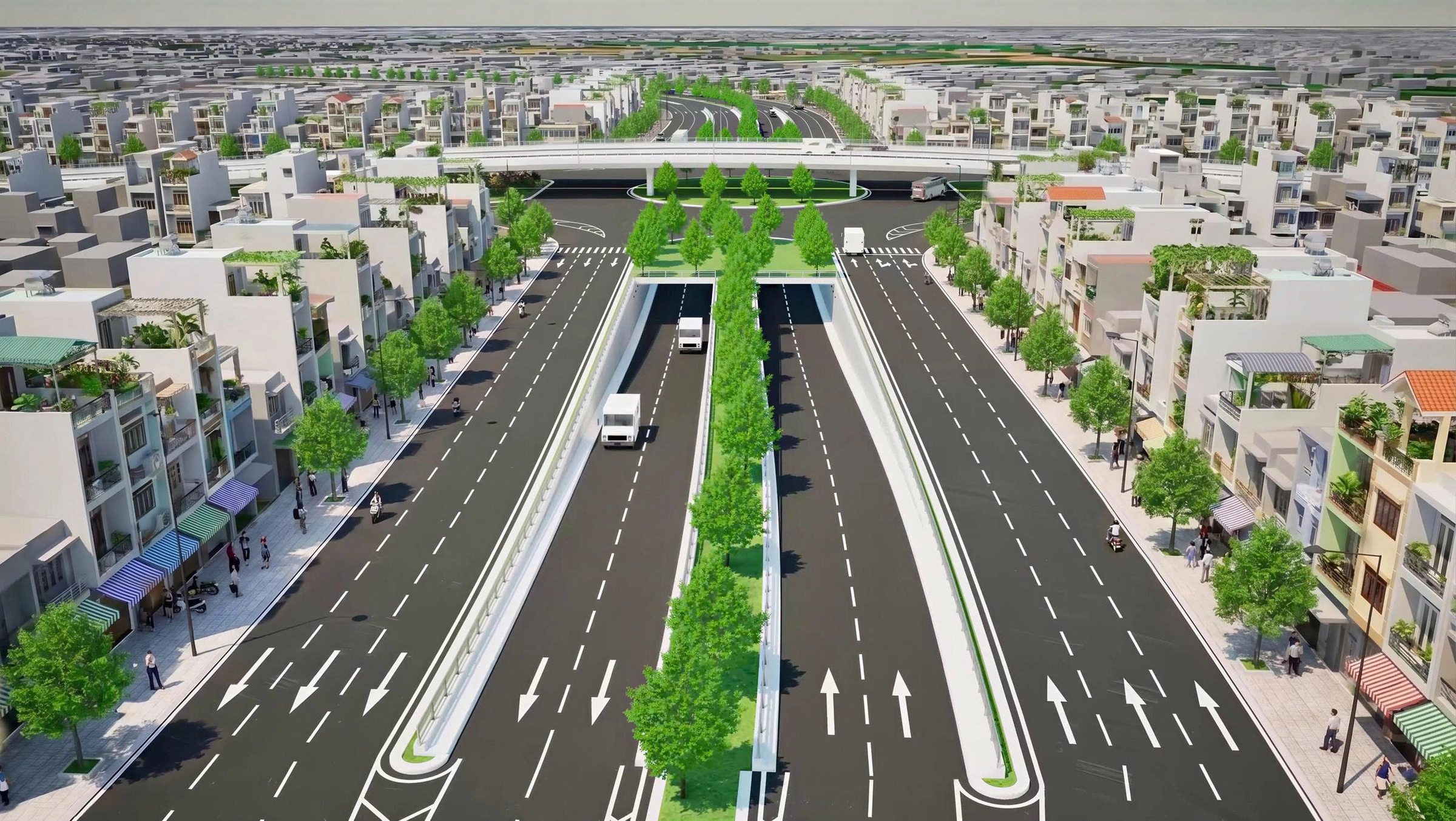
Scale of the National Highway 13 underpass
- Underpass scale: Designed for two-way traffic, with two lanes in each direction.
- Three-level junction: The underground tunnel, the at-grade road network and the Binh Loi viaduct above combine into a complete three-level junction that fully separates traffic streams.
- Ground-level layout: The existing roundabout at ground level will be retained, alongside landscape improvements, additional greenery and upgraded street lighting.
2. Binh Phuoc Junction and the Remaining Intersections
At Binh Phuoc Junction – a key intersection between National Highway 13 and National Highway 1 – an underpass similar to the one at Binh Loi will also be built as part of the National Highway 13 expansion.
All other junctions within the project will remain at grade. With the support of the elevated road, however, long-distance traffic above can still travel at speed without conflicting with traffic at ground level.
Widening Duc Nho and Ong Dau Bridges and Upgrading Technical Infrastructure
Alongside the road and underpasses, the National Highway 13 expansion plan also covers bridges and smart traffic management:
- Upgrading existing bridges: Duc Nho Bridge and Ong Dau Bridge will be widened to match the cross-section of the entire route.
- Intelligent Transport System (ITS): A modern traffic management system will be installed together with electronic toll collection (ETC).
- Barrier-free tolling: Toll points will have no barriers at all, allowing vehicles to pass continuously without stopping or queuing.
The VND 21,000 Billion Funding Structure and the Role of Resolution 98
Financially, the National Highway 13 expansion is split into two clearly defined component projects:
- Component project 1: Funded from the Ho Chi Minh City budget at around VND 14,400 billion, dedicated to compensation, resettlement support and site clearance.
- Component project 2: Delivered under a BOT contract with total investment of almost VND 6,300 billion, raised and arranged by the winning investor.
In terms of connectivity, National Highway 13 is an arterial route linking central Ho Chi Minh City with Thu Duc City, Binh Duong Province and the former Binh Phuoc Province, and is the only road leading directly to Mien Dong Bus Station. Despite its strategic position, the current road has only six lanes, so congestion is severe. Local authorities are now pressing ahead with site clearance to hand over the full cleared site to the contractor for the National Highway 13 expansion as soon as possible.
The National Highway 13 expansion was in fact planned more than 20 years ago, but was repeatedly stalled by policy obstacles and a lack of funding. Now, thanks to the special mechanisms under Resolution 98, the project has cleared these hurdles and can be restarted, bringing hope of a new face for transport infrastructure across the city’s eastern area.
What the National Highway 13 Expansion Means for Setia Edenia

Strategically located along the main trade corridor, Setia Edenia lies within the zone that stands to benefit directly from the National Highway 13 expansion. Once the expansion design is carried out on the ground, Setia Edenia will enjoy the full value of the surrounding infrastructure:
- Wider inter-regional connectivity: The addition of an 80 km/h elevated road and underpasses at the key junctions of the National Highway 13 expansion will help Setia Edenia residents travel to central Ho Chi Minh City, Tan Son Nhat Airport and the major industrial hubs quickly and safely, without worrying about bottlenecks.
- A complementary urban landscape: The 60 m avenue, with landscaped green medians, generous pavements and underground utilities, sits in perfect harmony with the green, ecologically balanced living environment envisaged at Setia Edenia.
- Underpinning long-term asset value: Expanding National Highway 13 from six lanes to 10–14 lanes, with total investment of VND 21,000 billion, is tangible evidence of the potential for property value growth at Setia Edenia, providing a solid foundation for both long-term homeownership and investment.
📌 Key Project Facts at a Glance
- Project / route: Upgrade and National Highway 13 expansion (from Binh Trieu Bridge to Vinh Binh / the former Binh Duong boundary, within Hiep Binh Ward, formerly Thu Duc City).
- Timeline: Groundbreaking around National Day on 2 September this year, with completion expected in 2028.
- Cross-section: 60 m wide (up from the current 19–27 m), carrying 10–14 lanes.
- Elevated road (viaduct): 3.5 km long (from Binh Trieu Junction to Binh Phuoc), four lanes, 80 km/h, BOT-tolled. The at-grade road is designed for 60 km/h and is toll-free.
- Junction solutions: Two-way underpasses (two lanes per direction) creating three-level junctions at Binh Loi (crossing Pham Van Dong Boulevard and the North–South Railway) and Binh Phuoc Junction (crossing National Highway 1). The Binh Loi roundabout is retained, with improved greenery and lighting. The remaining eight junctions are at grade.
- Ancillary works: Widening of Duc Nho and Ong Dau bridges; undergrounding of cables; barrier-free ETC tolling.
- Total investment: Almost VND 21,000 billion (Component 1: VND 14,400 billion from the city budget for compensation and site clearance; Component 2: VND 6,300 billion in BOT capital arranged by the investor). Implementation is enabled by Resolution 98.